

![Dr. Pitcairn Guide [pdf]](https://cdn.shopify.com/s/files/1/0970/0353/6700/files/Dr.-Pitcairn-Vegedog-Serving-Size-Ranges-2025.jpg?v=1770747411)
Vegedog™ Recipe Instructions
START WITH FRESH INGREDIENTS AND PREPARE FOOD AS YOU DO FOR OTHER FAMILY MEMBERS.
TRANSITION GRADUALLY
Mix a small amount of the new food in with the old food and adjust the proportions over a week or longer. You can start with up to 25% new food on the first day. Digestive enzymes are especially beneficial during the transition, while the digestive tract makes adjustments.
RECIPE NOTES & HOW MUCH TO FEED
Vegedog™ is for adult dogs (over 10-12 months old). It can be used for pregnant dogs if they are allowed to eat more of the recipes, but it is ideal to use the Vegepup supplement for pregnant dogs. Lactating dogs and puppies should be given the Vegepup supplement.
The Vegedog™ supplement needn’t be cooked or heated. It should be added after meals are prepared, but it is best to mix the supplement into warm food. Ingredients can be prepared separately, then mixed together, or you may come up with your own method.
Prepared meals may be stored in the refrigerator or freezer, with or without the supplement added.
To determine how much food to feed, ask your vet how many calories per day your dog should eat, or use a calorie calculator like http://vetcalculators.com/calories.html.
If you follow our recipes, adding the amount of supplement as instructed in the recipe, and you’ll have nutritionally complete food. Each recipe lists the number of calories contained in the entire recipe under the recipe title. Measure how many cups your prepared recipe yields. Divide the total number of calories by the number of cups you measured. That answer is the number of calories each cup of food contains. For example, if the entire recipe contains 3000 calories, and you end up with 8-1/4 cups of food, your recipe contains 363 calories per cup [3000 ÷ 8.25 = 363].
You can enter the calories per cup, along with your animal’s weight, on the calorie calculator website to find out how many cups to feed per day. Once you have the number of calories per cup in the food, you simply divide the number of calories your dog needs per day by the calories per cup to find out how much to feed. For example, if you determine your food has 285 calories per cup, and you are feeding a dog that needs 1150 calories per day, you’ll need to feed 4 cups of food per day [1150 ÷ 285 = 4.03].

Vegedog™ Daily Serving Amount
If you formulate your own recipes, it’s ideal to add Vegedog™ to one day’s worth of food, using the Daily Serving Size Chart (adjacent and on the product label). The chart is based on weight. Mix the recommended amount into the total amount of daily food, or divide the amount between daily meals.
Alternatively, if you know how many calories your recipe contains, you can add 1-3/4 tsp (8.5 grams) of Vegedog™ for every 1000 calories in the recipe.
ORGANIC & NON-GMO INGREDIENTS
GMO (Genetically Modified Organism) ingredients and herbicides can cause gastrointestinal issues, food allergies, and more. Soy, canola, and corn that is not organic IS almost certainly genetically modified in the USA. Compassion Circle strongly recommends organic food for you and your animals!
DIGESTIVE ENZYMES
Almost every process in the body requires enzymes. Digestion is no different. Digestive enzymes are produced in the body and found in plants and raw foods. These enzymes are heat sensitive, so cooking and processing food destroys the natural enzymes. We recommend adding plant-derived enzymes (lipase, amylase, protease, and cellulase) to any cooked food. Amylase is a particularly important aid for the digestion of carbohydrates. A little raw food doesn’t supply enough enzymes to compensate for the enzyme loss in cooked food. Compassion Circle resells two great digestive enzyme prodcuts — Enzyme Miracle and Plant Enzymes and Probiotics.
VEGETABLES - YES, PLEASE!
Adding daily veggies (never onions) to the diet is ideal. Vegetables add few calories, but add variety, vitamins, and minerals. Dogs are appreciative of “people” food such as raw cauliflower florets, asparagus spears, and celery stalk chew toys. Pureed raw vegetables are a wonderful addition to meals. You may also add cooked sweet potatoes, carrots, green beans, corn, or squash. Uncooked, chopped zucchini, broccoli, and green pepper are also good additions. It is best to keep the amount of veggies in the diet to about 10% or less to ensure your dog is getting enough protein from the protein sources in the following recipes.
FOOD YEAST - VEGEYEAST
Food yeast adds high quality protein, B vitamins, and flavor while helping deter fleas. Vegedog recipes no longer require food yeast for B vitamins, so nutritional yeast and VegeYeast are optional. Both are well liked and increase the nutrient density of food, and VegeYeast will counter the alkalinity of a plant-based diet. VegeYeast is a modified brewer’s yeast. It is more acidic than other yeast powders, thus beneficial for the urinary health of dogs.
OIL - EFAs ARE IMPORTANT
Essential Fatty Acids (EFAs) are particularly important. The omega-6 fatty acid, linoleic acid (LA), is crucial. Dogs can produce the other fatty acids they need with enough linoleic acid in the diet. This includes the production of arachidonic acid.
When a recipe calls for sunflower oil, it is to meet the linoleic acid (LA) requirement. The following oils are a comparable substitute for sunflower oil: safflower oil, evening primrose oil, grape seed oil, and hemp oil. If you use a different oil, understand that your dog needs 1/2 teaspoon (2.47mL) of one of the above oils for every 15 lbs (6.8 kg) of body weight each day to meet the linoleic acid requirement.
Omega-3 fatty acids are provided by the flax ingredients in the recipes. Flax ingredients provide the omega-3 fatty acid, alpha-linolenic acid (ALA). You may substitute 2/3 teaspoon (3.3mL) of flaxseed oil for 1 tablespoon (7g) of ground flaxseed, or vice versa. Alternatively, and better yet, use algae oil daily and in place of flax oil in recipes. Algae oil provides usable DHA and EPA to the diet. Both are a great benefit and dogs have a hard time synthesizing DHA and EPA from other Omega-3s.
Store oils in the refrigerator. Smell and taste them before use to be sure they are not rancid.
SEASONINGS
Imitation bacon bits, stevia (a sweet herb)*, imitation meat, spirulina, pureed vegetables, and favorite table scraps from your own meals increase palatability, although you’ll find it hardly necessary for palatability.
*DO NOT use xylitol in dog food. It is toxic.
TEXTURED SOY PROTEIN (TVP)
We highly recommend using organic, non-GMO soy products! Textured soy protein (TSP), also known as textured vegetable protein (TVP®) or soya chunks, is a defatted soy flour. Measure TSP (textured soy protein) before reconstituting. Flakes and granules must be reconstituted. Add 7/8 cup boiling water (207mL) to each cup of TSP (237mL) and let it absorb the liquid. Textured soy protein chunks (which are larger) may require brief simmering before ready for use. Recipe cup measures are based on 1 cup of dry TSP weighing 96 grams.
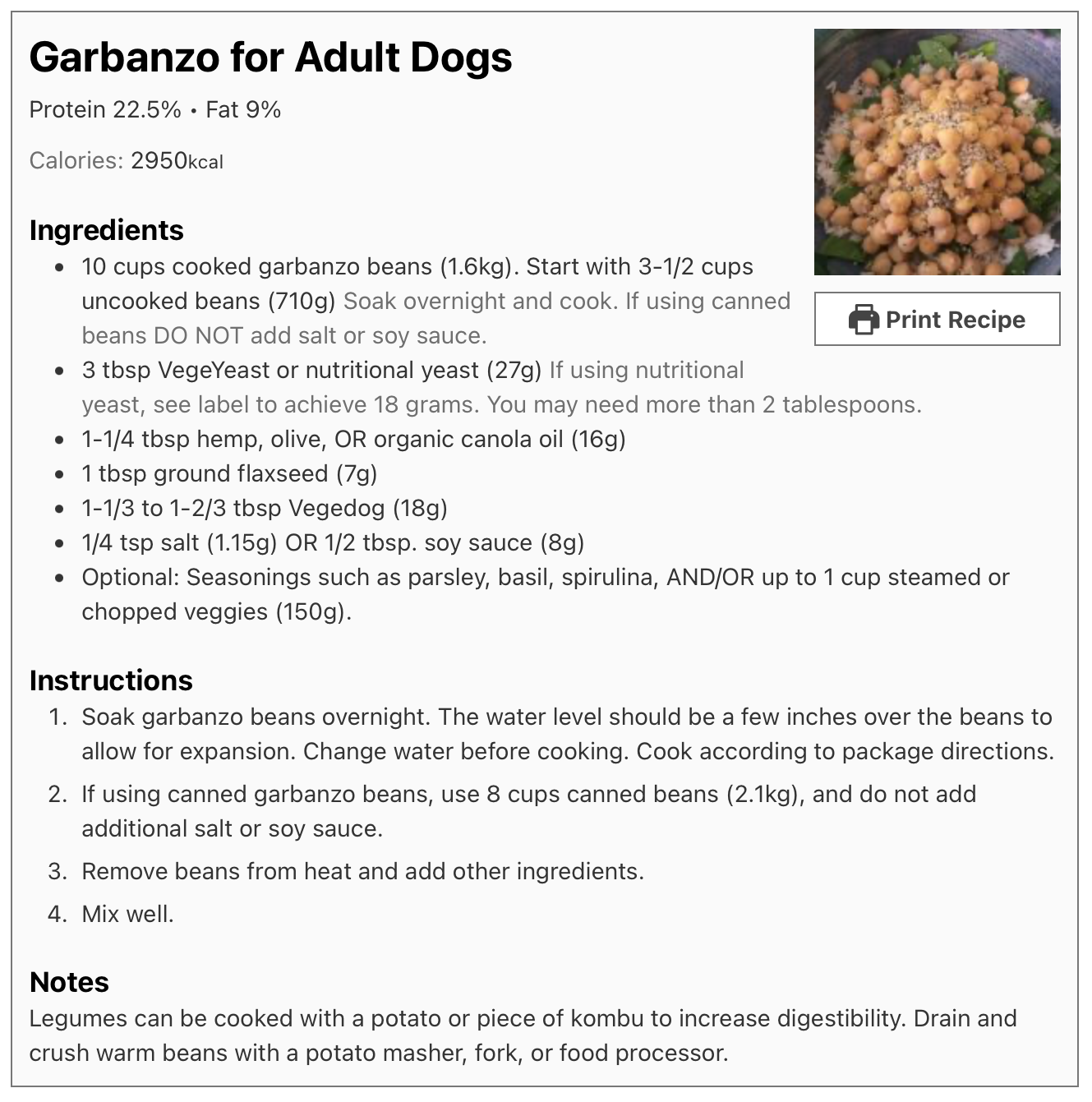
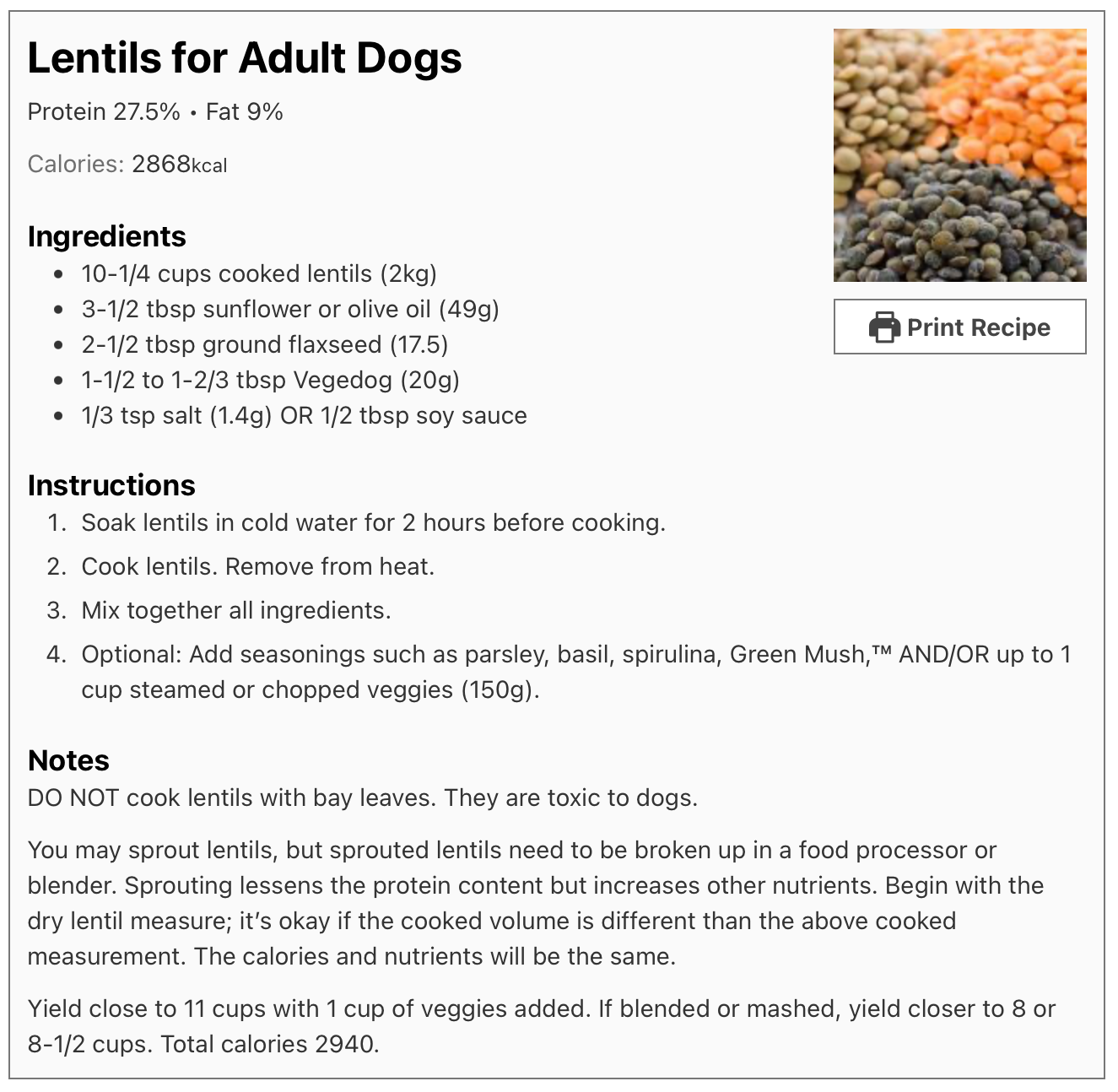
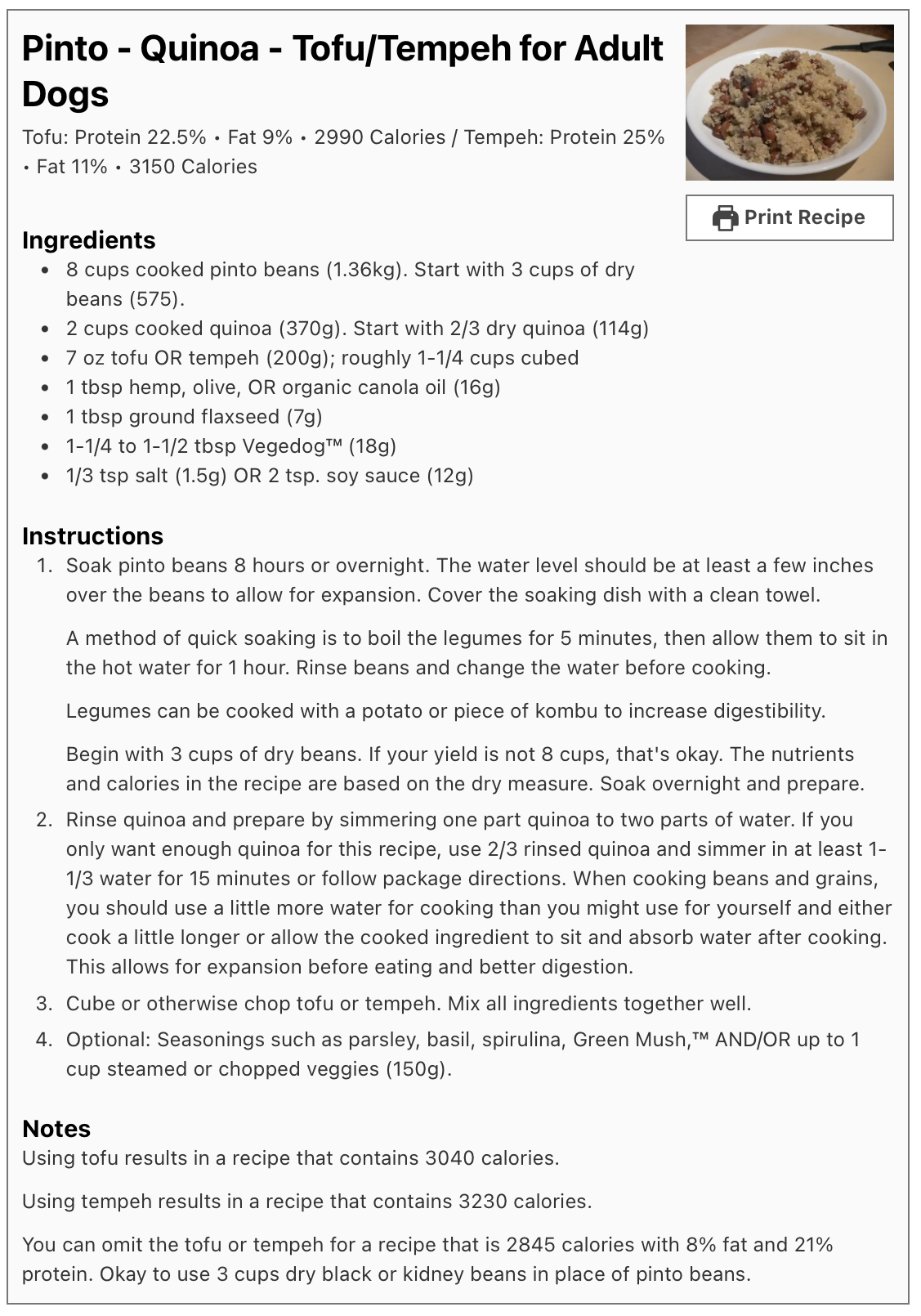
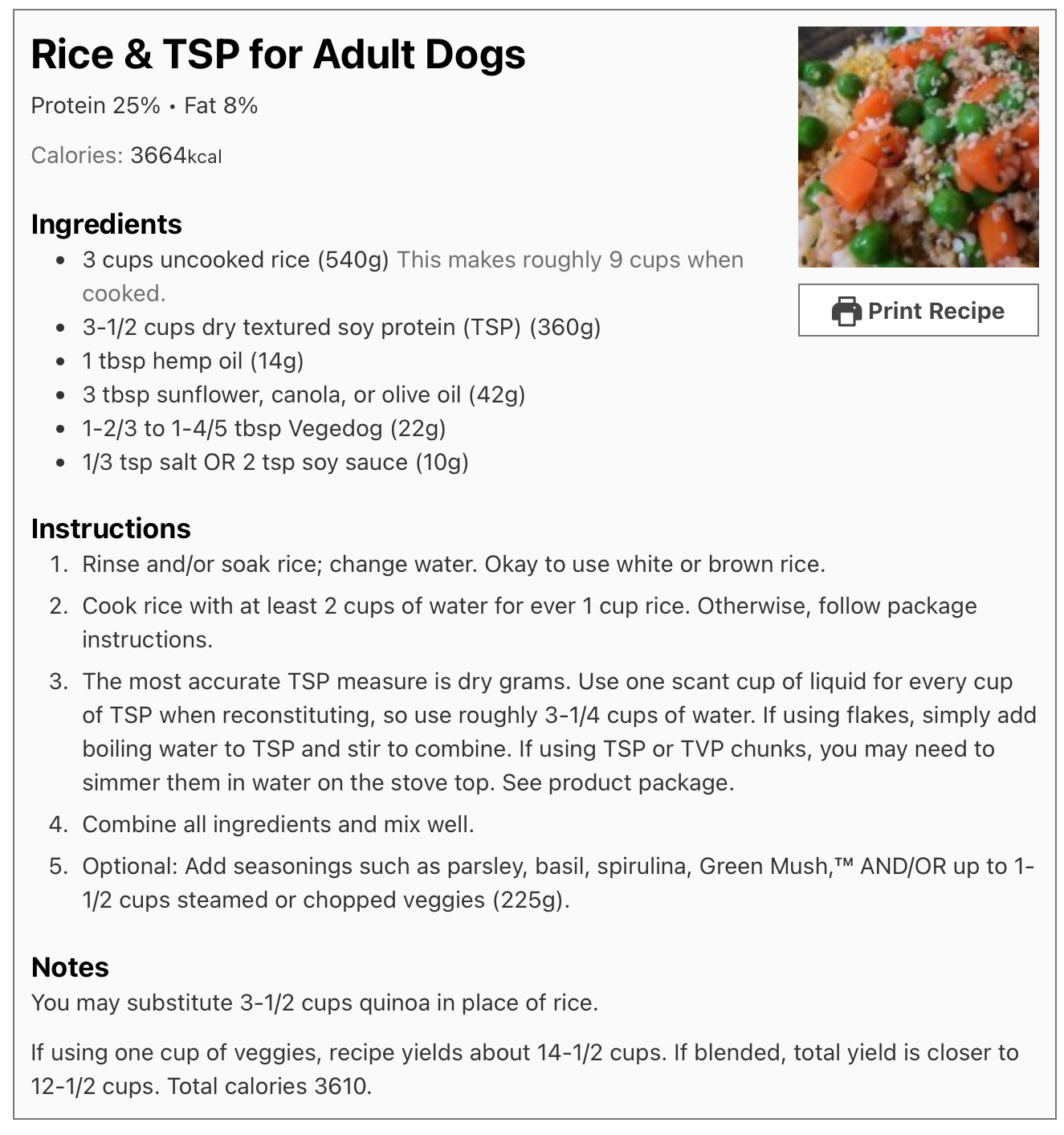
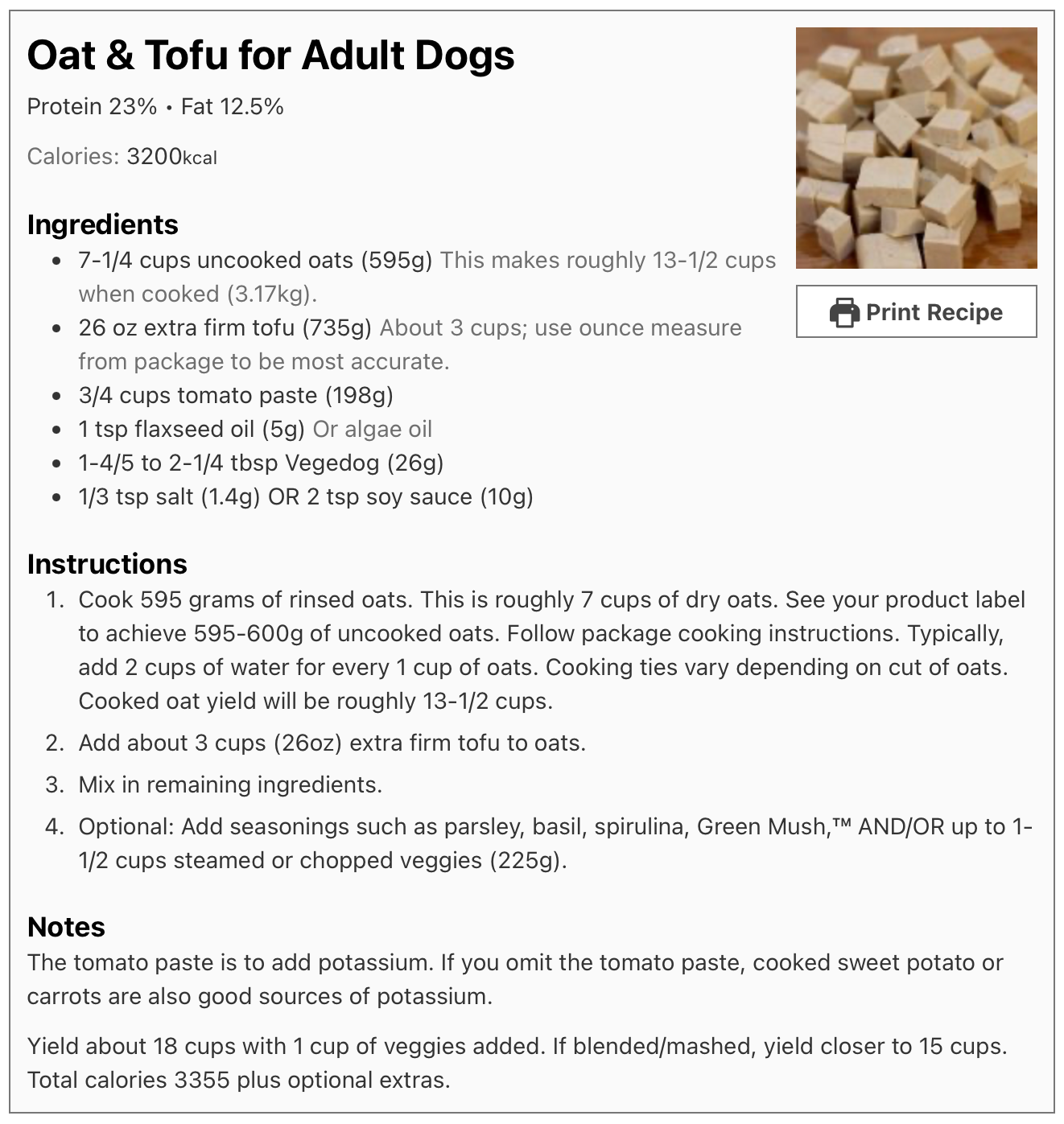
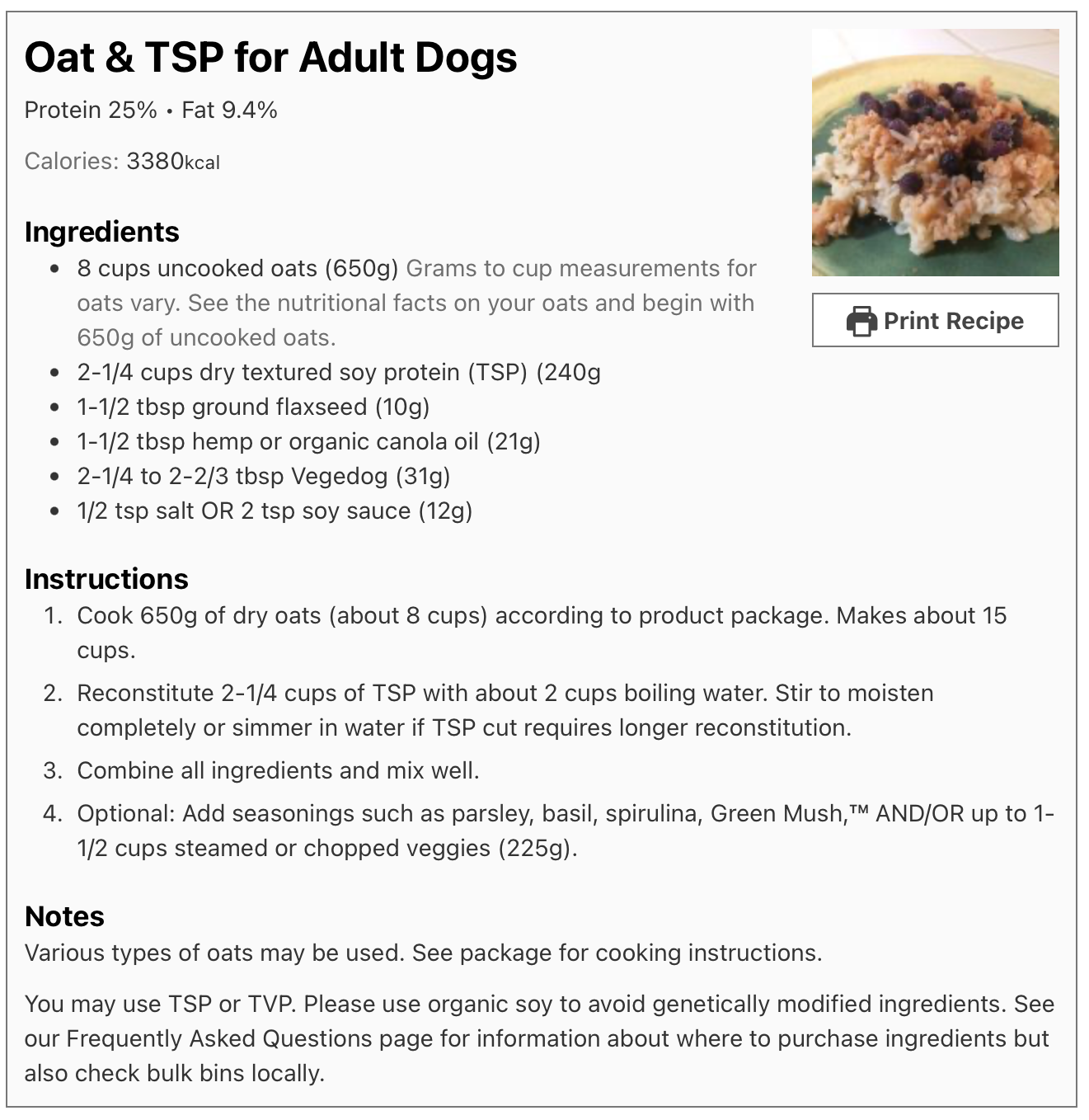
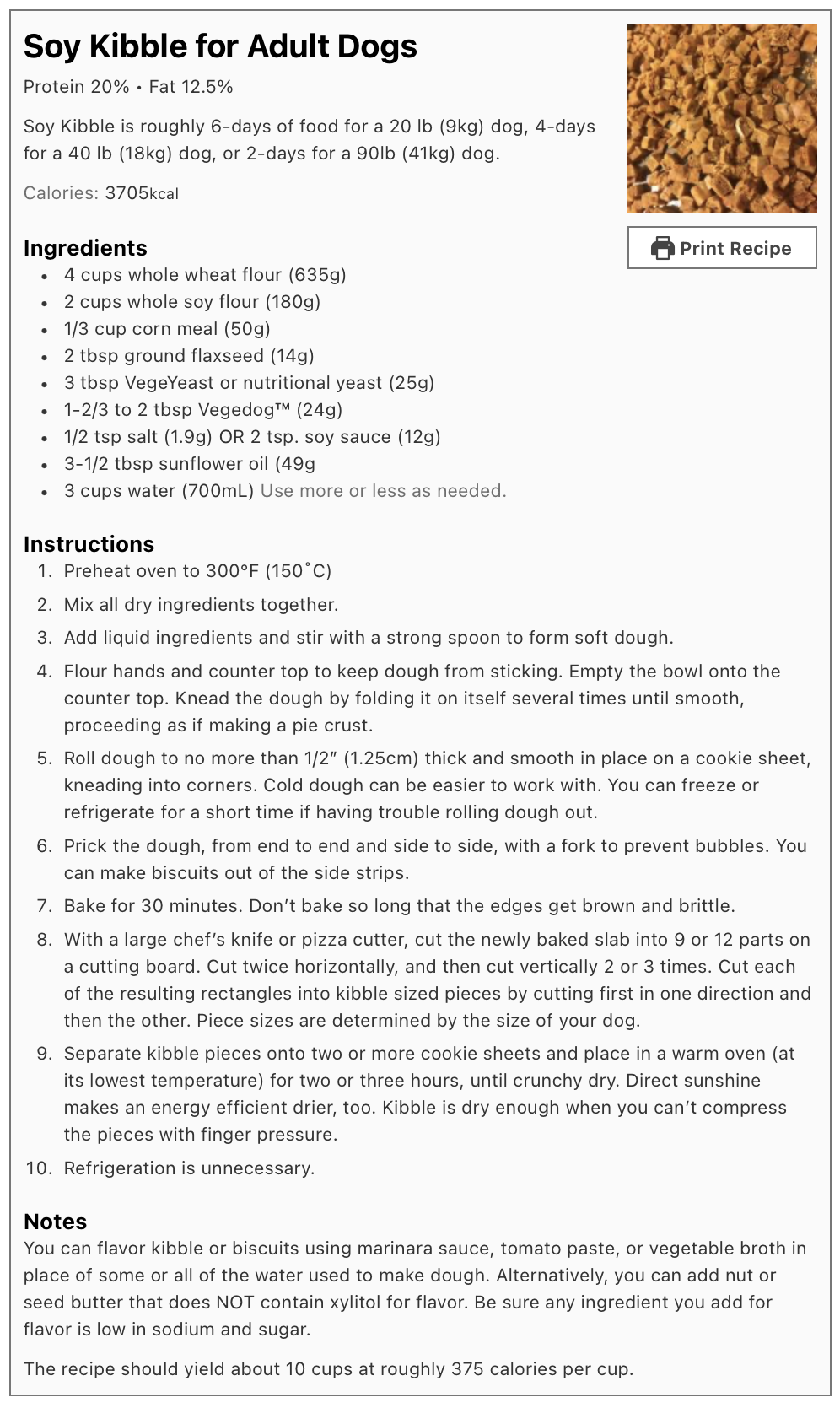
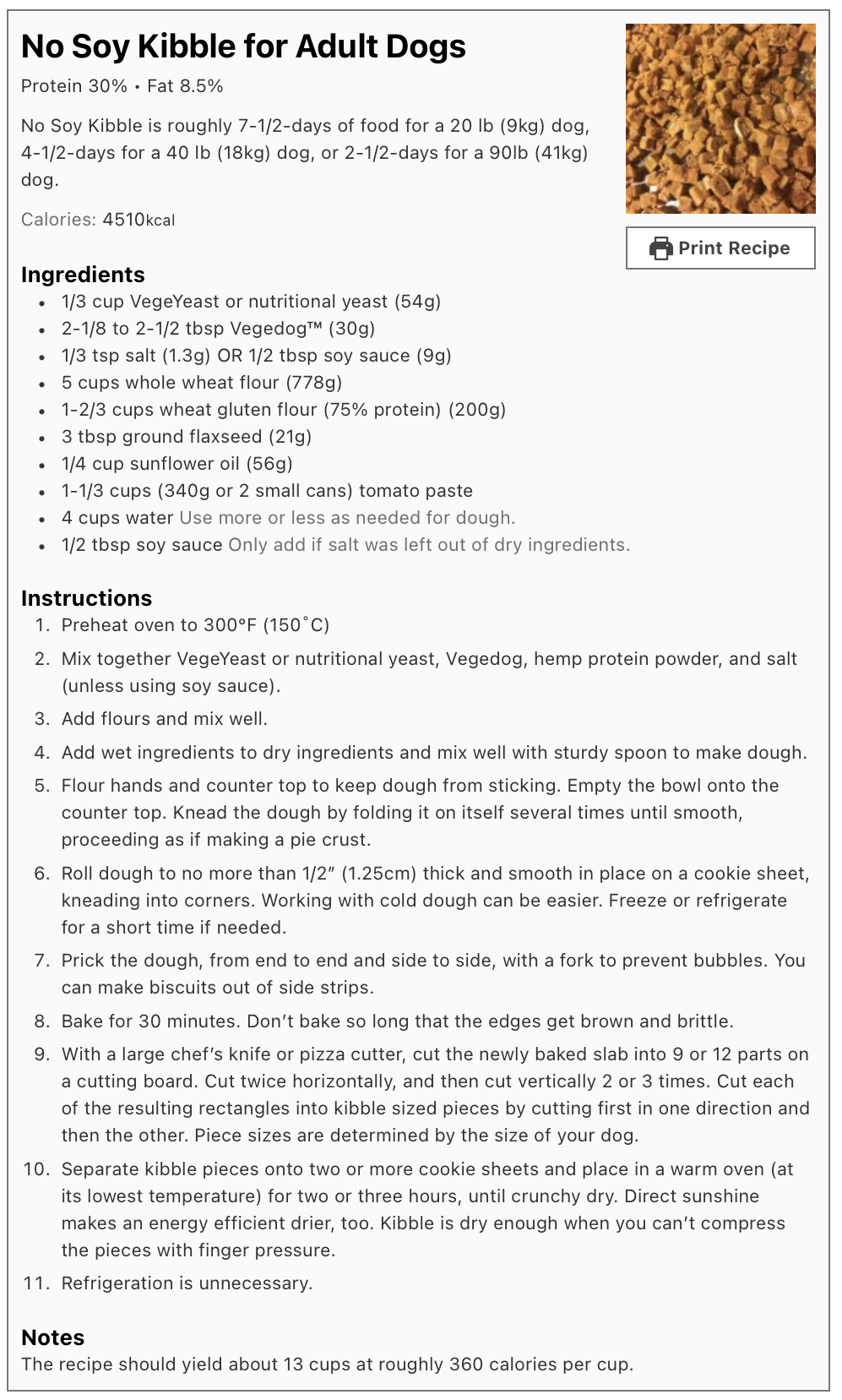

LOOKING FOR MORE RECIPES?
For additional recipes and health information, see Dr. Pitcairn’s Complete Guide to Natural Health for Dogs & Cats (4th Edition) by Susan & Richard Pitcairn. Please reference the 4th Edition, as previous editions do not have the same focus on vegan dog recipes.
For More information on Green Mush™ – our plant-based, pesticide free, green superfood for animals that’s a wonderful addition to any of our recipes – please visit the Green Mush™ Information Page.